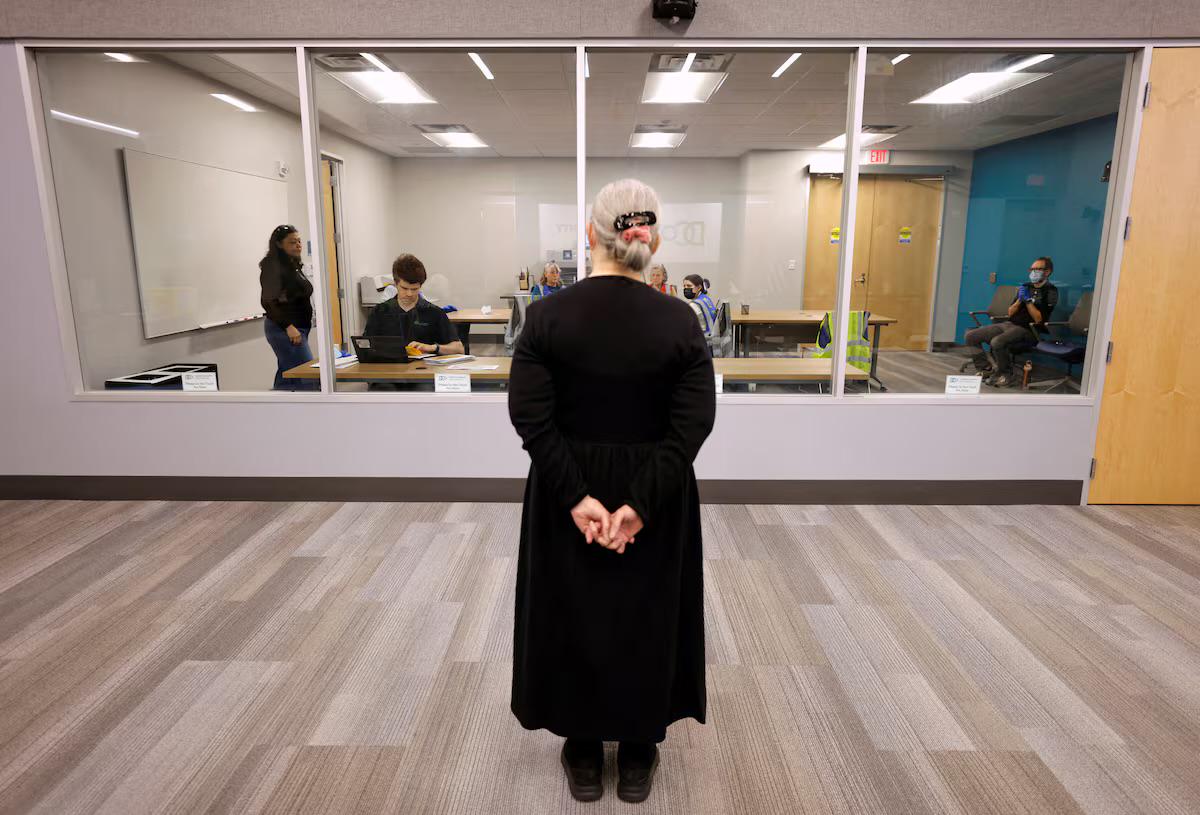
In an unprecedented expansion of federal oversight, the Department of Justice has deployed election monitors across all 50 states. While federal monitoring of polling locations dates back to the passage of the Voting Rights Act of 1965, previous deployments were limited to targeted jurisdictions with documented histories of voting access issues or specific legal challenges. Expanding the presence of federal observers nationwide represents a stark departure from past practice.
Historically, the federal government sent personnel to a select number of locations to ensure compliance with civil rights laws. During recent major election cycles, these monitors were dispatched to roughly 20 to 30 states. Scaling the effort to cover every single state marks a dramatic shift in how Washington interacts with local voting administration, bringing the federal footprint directly into communities that have rarely, if ever, seen federal observers on Election Day.
A Friction Point Between Federal Authority and State Control
Under the United States Constitution, individual states hold the primary authority to manage and conduct elections. Local election workers, bipartisan poll observers, and state judicial systems normally handle ballot security, counting procedures, and dispute resolution. Because of this decentralized structure, the sudden arrival of federal observers across every state has immediately drawn scrutiny.
Supporters of expanded oversight argue that a uniform federal presence helps ensure that voting rules are applied fairly and consistently nationwide. In their view, extra scrutiny deters potential administrative irregularities, protects ballot integrity, and provides an official baseline of observations that can help dispel post-election legal challenges. Having impartial personnel on the ground, advocates suggest, offers reassurance to voters who might otherwise question local procedures.
Critics, however, contend that deploying federal law enforcement personnel and government monitors to voting sites risks undermining local control and creating an atmosphere of voter intimidation. Concerns have been raised that placing federal observers at polling places—particularly in densely populated or politically competitive districts—could discourage turnout or interfere with normal polling operations.
Dating back to the Voting Rights Act, federal officials have been monitoring polling stations all along.
Expanded to 50 states is the unusual bit here. For comparison 2024 they were present in 27 states. 2020, 18 states.
Intimidation Risk or Reassurance?
For decades, routine poll monitoring was largely conducted by volunteers, local party representatives, and independent civic organizations operating under state-level guidelines. Transitioning from community-led poll watching to widespread federal oversight has transformed what used to be a routine administrative measure into a central point of political debate.
Many voters express unease with any visible federal presence at their local precinct, viewing the deployment not as a neutral safeguard, but as an potential vehicle for overreach.
If they want to watch people doing their civic duty, they can put a flock camera in each polling station. But that’s not the real intention, is it? The real intention is to intimidate voters.
Conversely, some legal experts and observers point out that federal monitors generally operate under strict protocols prohibiting direct interaction with voters or ballot handling. In standard practice, these observers are tasked purely with taking notes, documenting conditions, and reporting potential violations of federal law back to civil rights attorneys at the Justice Department. Whether their presence ultimate serves to protect access or heighten tension remains one of the defining questions of the current voting landscape.